


At AlphaGainz we offer powerlifting programs with strength training to serious athletes, who want to maximize their absolute strength in big three barbell lifts that include squats, bench press, and deadlift. Powerlifting is a competitive weightlifting strength sport, and is different from bodybuilding ( muscle hypertrophy) and Olympic lifting ( explosive movements like snatch). Our gym focused on maximizing weight lifting through special equipped machines that include combos, mono lifts and speciality bars.
Our custom heavy lifting protocols start with a performance check test that categorizes powerlifters from beginner to elite level. In this we offer a 5/3/1 powerlifting program with personalized lower and upper splits and intensity targets based on RPE( Rate of Perceived Exertion).
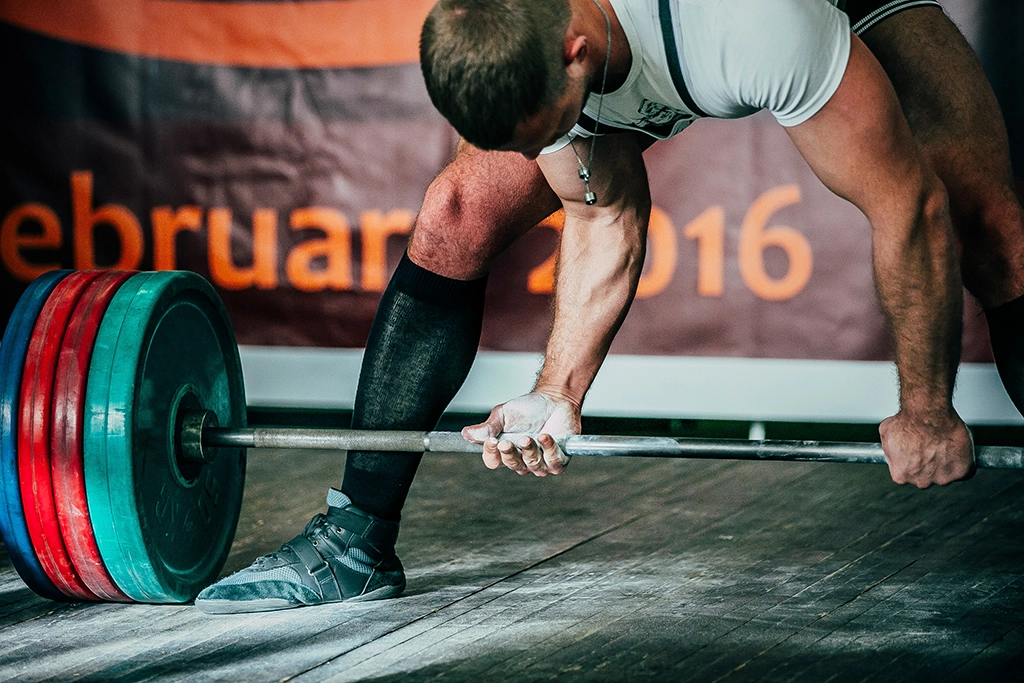
Powerlifting and Strength Training Services Explained
We provide iron sports programming methodologies with structured block periodization, deload weeks and analyze your performance benchmarks by tracking 1RM (One-Rep Max).
AlphaGainz maximal strength training program offers holistic support through 1-on-1 coaching, custom nutritional plans, and customized weight classes. Our program provides in-person competition handling to prepare you for meet days at International Powerlifting Federation (IPF) , International Powerlifting League (IPL), or local federations.
Join our strength and conditioning gym in Colorado Springs to maximize your total points score in powerlifting.
What is Powerlifting & Strength Training for Serious Athletes?
Powerlifting is a competitive discipline of strength athletics that focuses on maximal absolute strength to stabilize the barbell though big three lifts that are squat, bench press, and deadlift. Our program improves neurological efficiency, intra muscular coordination and builds capacity to move a one rep max (1RM) in powerlifters, to maximize their dots or wilks score.
Three big barbell movements for powerliters are listed below:
Squat:
Our powerlifting program starts with squats, the lower-body strength movement and a first lift in the raw powerlifting meet.
Athletes start squat lifts by applying chalk to their hands and upper back to handle barbell stability. They then unrack the bar from the combo rack and position bar on the upper back by using either low bar or high bar setup. Then the lifter takes two to three small steps backward ( walk-out) to create space from the rack and sets a stable foot position before squatting.
In our lifting program, athletes do 3-5 sets of 5-8 reps at 65-75% of their 1RM to build foundational lift grip. When lifters gain their maximum strength, the program moves to 3-4 sets of 1-3 heavy lift reps at 85-92% of their 1RM (RPE 8-9) to prepare for competition.
This step by step squat lifting approach in our gym helps lifters build absolute strength, power and prepare them for competition rules.Bench Press:
Athletes move to the next power lift which is Bench press, the upper body discipline and the second bar lift after squatting.
Athletes start bench press in AlphaGainz by applying chalk powder on their shoulder blades and palms for high friction setup on the bench. Then they lift their chest and pull their shoulder blades back to grip the bar at competition width ( up to 81cm between index fingers).
Bench press lift begins with the unrack that is assisted by our expert lift coaches to bring the bar over the chest of the lifter to a full elbow lockout. Lifters are guided to start their early powerlifting phase with 3-5 sets of 6-10 reps at 60-70% of their 1RM to build chest and triceps. When lifters meet the maximum strength threshold they shift to 3-5 sets of 1-3 heavy reps at 88-95% of their 1RM (RPE 9).
This structured bench press approach helps athletes increase their highest total score in powerlifting.Deadlift:
Deadlift is the final and toughest lift after bench press in our powerlifting program. It is the third event in a raw powerlifting meet. Athletes start by applying chalk to their hands to secure their mixed grip, hook grip, or overhand grip on the deadlift bar. This bar is slightly longer and thinner than a standard barbell, that gives flex (“whip”) to assist lifters during the pull.
Lifters in their early training phase, perform 3–4 sets of 5–8 reps at 60–70% of their 1RM to practice a neutral spine and strong hip hinge. This programming shifts to 2–4 sets of 1–2 heavy singles or doubles at 90–96% of 1RM (RPE 9–9.5). Each deadlift rep helps the lifter to finish with full hip and shoulder extension.
This step-by-step deadlift training helps athletes build posterior chain power, improve mental toughness, and maximize their Total Wilks scores ( 200 – 600)
5 Support exercises in our powerlifting program include:
- Romanian Deadlifts (RDLs): In our gym, we guide athletes to perform 3–4 sets of 8–12 reps at 50–60% of their max to build hamstrings and glutes.
- Good Mornings: We guide lifters to do 3 sets of 10–15 reps to strengthen their spinal erectors.
- Glute-Ham Raises (GHR) / Nordic Curls: Our program includes 3–4 sets of 8–12 reps to strengthen the hamstrings.
- Barbell Hip Thrusts: We guide athletes to perform 3–4 sets of 8–12 reps to target the glutes for a stronger lockout.
- Deficit Deadlifts: Lifters use 70–80% of their max to increase range of pulling strength from the floor.
These exercises strengthen hamstrings, glutes, spinal erectors, and improve lockout power in lifters.
What’s the difference between Powerlifting, Bodybuilding, and Olympic Weightlifting?
The difference between Powerlifting vs Bodybuilding vs Olympic Weightlifting shows up in goals, power lifts, specialized bars, and total points.
The table below breaks down the main objectives, core lifts, equipment, intensity, and scoring methods for these three strength sports, helping you understand how it approaches training and performance:
| Feature | Powerlifting | Bodybuilding | Olympic Weightlifting |
| Main Objective | To achieve Maximal Absolute Strength (Fmax). | To improve body aesthetics and Hypertrophy. | To develop Explosive Power for High-velocity force production. |
| Core Disciplines | The core disciplines are barbell big three which is Squat, Bench Press, and deadlift. | The core disciplines are Varied isolation and compound movements (e.g., Lat Pulldowns, Flyes). | The core disciplines are Snatch, Clean & Jerk. |
| Barbell Specs | The barbell specs for powerlifting are Stiff Power Bar of 29mm diameter, rigid steel to minimize “whip,” and center knurling for squat stability. | The barbell specs for bodybuilding are Standard or Multi-purpose bar which focuses on constant tension in muscle. | The barbell specs for powerlifting are Olympic Bar of 28mm diameter with high “whip” (elasticity) and needle bearings for fast sleeve rotation. |
| Specialized Gear | The specialized gear in the powerlifting program are Combo Racks, Monolifts, stiff deadlift bars, and calibrated kilo plates. | The specialized gear in bodybuilding are Isolation machines, cable stacks, dumbbells, and resistance bands. | The specialized gear to prepare for Olympic Weightlifting are bumper plates (designed to be dropped), and pulling blocks. |
| Rep & Intensity | The reps in powerlifting start from 1–5 reps at 85–100% 1RM. | The reps in bodybuilding starts from 6–12+ reps at 60–80% 1RM. | The reps in weightlifting focus on triple extension and bar speed. |
| Scoring Metric | Powerlifting uses dots/wilks score for beginner to elite lifter from 300 to 600 plus total dot score. | Bodybuilding uses subjective judging with scorecards, where lower points rank higher (1st place); there is no mathematical coefficient. | Olympic weightlifting uses Sinclair coefficient for standard to world class athletes from 100 to 400 plus coefficient. |
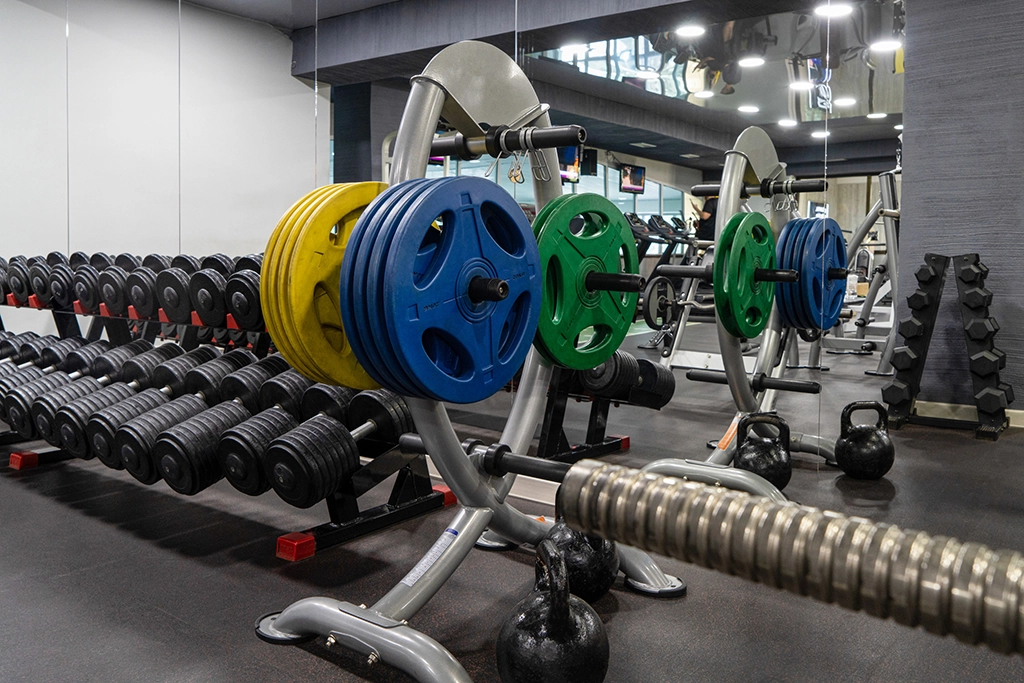
These three sports use barbells, our gym’s equipment is customized for powerlifting and Olympic-style lifting, including stiff bars, calibrated plates, and competition-ready racks. This develops strength and lifting techniques in serious athletes.
How Do We Evaluate Your Powerlifting Strength Level Before Training?
At AlphaGainz powerlifting program, athletes’ fitness journey begins with a comprehensive Performance Assessment based on the Big Three lifts. This diagnostic phase analyzes lifter current absolute strength with your 1RM (One-Rep Max) and movement patterns, to identify “energy leaks” that hinder your progress. This assessment is placed in a programming tier to match your training maturity.
We categorize athletes into five powerlifting strength levels based on their lifting experience and relative performance, these are listed below:
Beginner Level:
An athlete with zero to 1 year of training is considered a beginner, who learned basic lifting and ranking in the bottom 5–20% of lifters. A male weighing 180–200 lbs with totals 600–750 lbs, while a female in the 130–150 lbs (60–70 kg) class totals 350–450 lbs across the squat, bench press, and deadlift.Novice Level:
An athlete with 6–12 months of powerlifting training is a novice. A male weighing 180–200 lbs with totals 750–900 lbs, while a female in the 130–150 lbs (60–70 kg) class totals 450–550 lbs across the barbell movements.Intermediate Level:
An athlete with 1–2+ years of heavy lifting training is intermediate, with maximum absolute lifting strength. A male in the 80–90 kg class typically totals 900–1,050 lbs, while a female in the 60–70 kg class totals 550–650 lbs.Advanced Level:
An athlete with 2–5+ years of powerlifting experience is advanced. Typical totals for a male are 1,200–1,350 lbs, and for a female 750–850 lbs.Elite Level:
An athlete with 5+ years of training and platform experience is elite, often competing at national levels. Males typically total 1,500+ lbs, while females total 900+ lbs, with the top 5% of lifters.
What are the Programming points in our Powerlifting Program?
Our personalized powerlifting programming include personalized upper and lower splits, Rate of Perceived Exertion (RPE), deload weeks, and performance tracking. We prioritize individualization, so every athlete hits their 1RM (One-Rep Max) goals.
Below are the lifting programming methods we used in our heavy lifting program:
- Personalized Upper and Lower Splits: We offer specific upper and lower body splits for higher training volume and targeted hypertrophy in the muscle groups to achieve quadriceps, posterior chain, and triceps.
- RPE-Based Intensity (Rate of Perceived Exertion): RPE scale is to manage fatigue, to train serious athletes at the optimal intensity for their current neurological recovery.
- Structured Block Periodization: We divide your training into specific mesocycles, moving from Hypertrophy blocks (building muscle mass) to Strength blocks (improving force production) and finally Peaking blocks (preparing for a max attempt or competition).
- Strategic Deload Weeks: Our experts guide athletes to scheduled deload weeks instead of overtraining. This helps your Central Nervous System (CNS) to recover with time.
- Performance Benchmarks & 1RM Tracking: Our lifting program uses real-time performance tracking by estimating your 1RM and Dots/Wilks score across every training block.
How Does Our Powerlifting Coaching Work?
At AlphaGainz, we offer one-on-one coaching, custom meal plans, weight class management, and competition handling. We provide the elite-level infrastructure required to excel in the iron strength sport (powerlifting).
- 1-on-1 Coaching: Every athlete is guided with a powerlifting coach for personalized training and programming adjustments. This makes your progress faster by managing your sticking point and the experts feedback helps you meet strict IPF or IPL technical standards.
- Custom Nutritional Plans: We provide recovery-based food strategies for high-intensity CNS output. Our plans focus on macronutrient timing to maximize the glycogen storage for your heavy singles and optimal protein intake for hypertrophy.
- Weight Class Management: Our program helps athletes compete at their strongest by using strategic bodyweight management. We guide you through weight class protocols, so you hit your target weight without losing strength.
- In-Person Competition Handling: Our coaches manage warm-up timing, select your 1st, 2nd, and 3rd attempts, to maximize your Total. We take care of the logistics so you can focus on lifting.
What Benefits Athletes Get from Our Powerlifting Program?
Benefits athletes get from AlphaGainz powerlifting program are increased strength, explosiveness, injury resilience, energy efficiency, and mental toughness.
4 physical benefits powerlifter gets from our strength and lifting programs are listed below:
Maximum Force Production:
Our program provides powerlifting training to athletes to maximize their absolute strength.Sport-Specific Carryover:
We provide sports focused training that increases your force ceiling, and you move more ground-force into every stride. This improves sprint speed, your 40-yard dash and vertical leap.Increase Energy Efficiency:
In our gym program we provide strength development so your muscles use less effort during intense lifting.Injury Resilience:
Our gym program provides heavy loading to increase bone density and strengthen the posterior chain, protecting the knees, Anterior Cruciate Ligament (ACL), and lower back from high-impact demands.
3 psychological and social benefits powerlifter gets from our strength and powerlifting programs are listed below:
Mental Fortitude:
We provide training that builds grit and helps athletes control arousal in high-pressure situations.Measurable Confidence:
We offer athletes opportunities to hit personal records, by giving objective proof of progress and fostering a “winner’s mindset.”Competitive Accountability:
Our program provides a supportive AlphaGainz community where athletes push each other in a positive competitive environment.
Ready to Maximize Your Absolute Strength with AlphaGainz?
Stop guessing and start gaining, to add 50+ lbs to your total or improve your sprint speed by 0.2 seconds. We provide structured periodization and 100% no-fluff coaching to turn raw effort into elite performance.
Your journey in AlphaGainz starts with a single rep.
- 9-Week Strength Blocks tailored to your current RPE.
- 1-on-1 Technical Audits to optimize your leverages.
- 100% Data-Driven Programming for measurable PRs.