
Your vertical jump isn’t just about genetics. I see this all the time at our gym in Colorado Springs, CO – athletes walk in thinking they’re stuck with whatever jump height they were born with. Then six weeks later, they’re touching the rim for the first time or dunking when they couldn’t before. The difference isn’t magic, it’s smart training.
AlphaGainz has been helping Colorado athletes add serious inches to their vertical for years now. Basketball players trying to get above the rim, volleyball players working on their spike approach, and even soccer players wanting more power on headers. The training principles are the same across sports – you need explosive power, and you need to train your body to produce it fast.
Why Vertical Jump Training Actually Works
Your muscles can already produce more force than you think. The problem is your nervous system hasn’t learned to recruit all those muscle fibers at once.
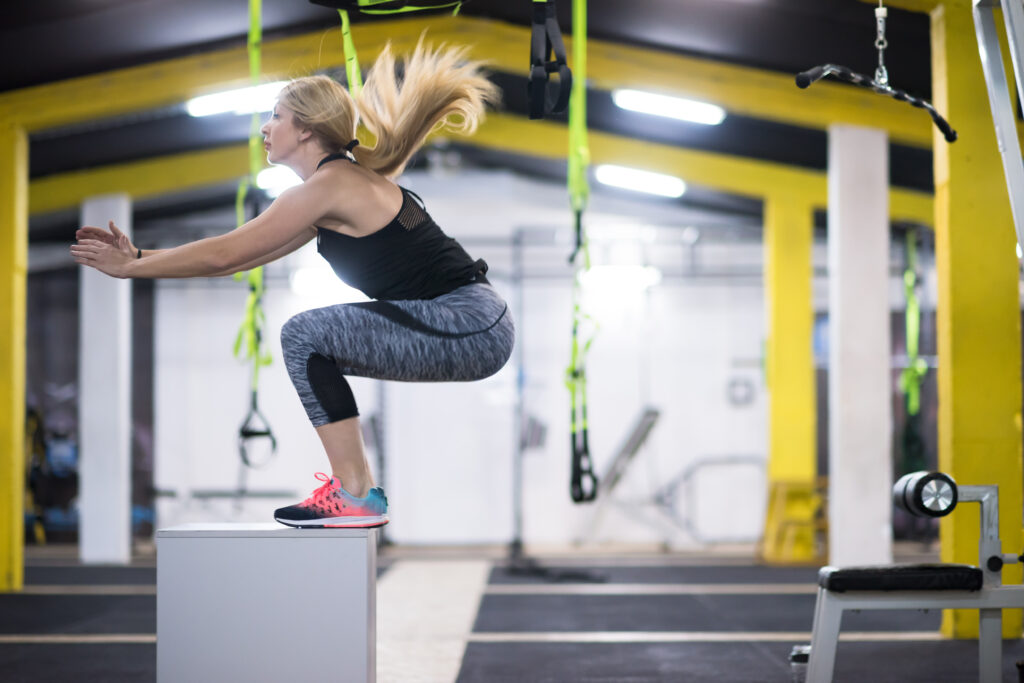
Vertical Jump Training in Colorado Springs, CO
When you jump right now, you’re probably only activating 60 or 70 percent of what’s available. Proper training teaches your body to fire everything together, harder and faster.
Plyometric work does most of the heavy lifting here. Box jumps, depth jumps, bounding drills – these teach your muscles to contract explosively. But you can’t just do plyos randomly and hope for results. The sequencing matters. How many contacts you do per session matters. Rest between sets definitely matters.
At AlphaGainz, we start people with basic stuff, even if they’re already decent athletes. You’d be surprised how many college-level players have gaps in their foundational movement patterns. Fixing those gaps first means everything else works better later. A volleyball player came in last month who could already jump pretty well, but her landing mechanics were terrible. We spent two weeks just cleaning that up before we even started adding height. Now she’s jumping three inches higher than when she started and her knees don’t hurt anymore.
The Strength Component Nobody Talks About
Plyometrics get all the attention in jump training, but strength work is just as critical. You need strong glutes, strong hamstrings, and a solid posterior chain overall. Single-leg strength matters too – most athletes have imbalances they don’t even know about.
We run assessments at our training CO facility before anyone starts a jump program. Testing single-leg strength almost always shows one leg significantly weaker than the other. That weaker leg is limiting your jump height, whether you realize it or not. You’re only as explosive as your weak side allows.
Trap bar deadlifts, Bulgarian split squats, Nordic curls – these exercises build the strength base that makes explosive training actually work. Think of strength as the engine size, and plyometrics as teaching that engine to rev faster. You need both.
The squat debate comes up constantly. Everyone wants to know if they should back squat or front squat, or whatever. Honestly, for vertical jump training, trap bar deadlifts give you more bang for your buck. They’re easier to learn, they load the posterior chain better, and they have better carryover to jumping. We do use squats at AlphaGainz, but they’re not the main focus like some programs make them.
Colorado Altitude and Your Training
People ask about altitude effects all the time. Training in Colorado Springs at 6,000 feet doesn’t magically make you jump higher, but it does change how we program things. Recovery takes slightly longer up here. Your cardiovascular system works harder during conditioning. That means we’re careful about training volume, especially when athletes first start.
The flip side is that when Colorado athletes compete at lower elevations, they usually feel great. More oxygen available, better recovery between plays, that kind of thing. But the training itself at our gym in Colorado Springs, CO, focuses on the same principles that work everywhere – force production, rate of force development, and movement quality.
The weather here lets us train outside pretty much year-round, too, which is nice for variety. Sometimes getting athletes out of the gym for some hill sprints or stadium work makes a difference mentally. Keeps training from getting stale.
Programming That Actually Makes Sense
Most vertical jump programs online are either too complicated or too simple. The complicated ones have you doing seventeen different exercises with specific percentages and rest intervals measured to the second. The simple ones just say “do box jumps three times a week” and hope for the best.
Reality falls somewhere in the middle. You need progressive overload – that’s not negotiable. You need to manage fatigue so you’re fresh enough to actually be explosive during training. And you need variety so your body keeps adapting instead of plateauing.
At AlphaGainz, we typically run jump programs in four-week blocks. Week one introduces new movements and builds volume. Weeks two and three push intensity higher. Week four backs off to let you recover and adapt. Then we test, make adjustments, and start the next block slightly harder than the last one.
The specific exercises change based on what you need. Someone with weak glutes gets more hip thrust variations and single-leg work. Someone with good strength but a poor rate of force development does more true plyometrics and Olympic lift variations. Cookie-cutter programs don’t work because everyone’s starting point is different.
How Fast Can You Actually Add Inches
Beginners see results fastest. If you’ve never trained your vertical specifically, adding two to four inches in your first eight weeks is realistic. Athletes who’ve been training a while see slower progress, but it still happens – maybe an inch or two over the same timeframe.
The key is consistency. Training twice a week minimum, ideally three times. Missing sessions kills progress faster than anything else. So does training when you’re beat up or not recovered. Quality over quantity applies here more than almost anywhere else in training CO programs.
We’ve had athletes at AlphaGainz add six inches to their vertical over a full year of consistent work. That’s life-changing for a basketball player trying to make a college roster or a volleyball player who needs a bigger block. It doesn’t happen overnight, but it definitely happens if you put the work in right.
Your vertical jump isn’t fixed. It responds to smart training just like everything else. The difference between where you are now and where you could be is usually just a few months of focused work with people who know what they’re doing.