
High school weight rooms have a predictable problem. Kids rush to load the bar before they understand what they’re doing. A freshman watches a senior squat 315 and figures he should be somewhere close to that. Never mind that the senior has three years of training experience and the freshman just learned what a squat rack looks like last week.
This creates injuries that shouldn’t happen. Shoulder problems from benching too heavy too soon. Lower back issues from deadlifting with a rounded spine. Knee pain from squatting with terrible mechanics. Most of these injuries trace back to one thing: trying to lift more weight than the athlete can actually control.
Strength training works. The data shows it clearly. Athletes who lift properly get stronger, jump higher, run faster, and get hurt less during competition. But there’s a gap between “lifting” and “lifting properly” that a lot of high school programs never address. Kids show up, load barbells, and hope for the best. Sometimes it works out. Often it doesn’t.
Weightlifting For Athletes In CO
Technique Matters More Than Anyone Admits
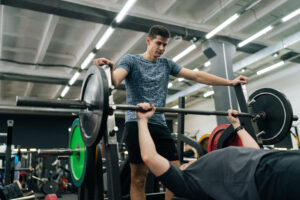
Walk into a typical high school gym during after-school training and you’ll see it everywhere. Quarter squats with way too much weight. Deadlifts that look more like a yoga pose gone wrong. Bench press with the bar bouncing off the chest like a trampoline. Nobody’s really watching. Coaches are spread thin across multiple athletes. Kids are coaching each other based on what they saw on YouTube last night.
Small problems compound over time. An athlete’s shoulder feels a little off after bench day. Not bad enough to stop, just… off. So they keep training on it. Two weeks later, it’s worse. A month later, they’re finally telling someone, and now what could’ve been fixed with a form correction and a week off has turned into a strain that needs physical therapy.
Learning proper technique isn’t exciting. Starting with an empty bar when your buddy’s loading plates feels embarrassing. But this is where safe lifting starts. The movement pattern has to be right before you add resistance. Otherwise, you’re just reinforcing bad habits under progressively heavier loads until something gives out.
Squats need depth, upright torso position, and knees that track properly. The bar path matters. Where you’re looking matters. How you’re breathing matters. Deadlifts start with hip position and spinal alignment – get those wrong and you’re asking for back problems. Bench press requires shoulder blade position and a stable base. These details aren’t optional.
Nobody Wants to Warm Up
Most athletes treat warm-up like a formality. Walk in, do a few arm circles, maybe some half-hearted leg swings, then go straight to working sets. They’re eager to start lifting and warm-up feels like wasted time.
Then they wonder why things hurt. Cold muscles don’t respond well to sudden stress. Joints need to move through their range before you load them. Your nervous system needs to wake up and coordinate movement patterns. Skipping this process leaves you vulnerable to strains and pulls that proper preparation would prevent.
Ten to fifteen minutes. That’s what it takes. Some general movement to raise body temperature. Dynamic stretching that actually moves joints through range. A few sets ramping up to working weight rather than jumping straight there. It’s not complicated, but it needs to happen.
The athletes who warm up properly get hurt less. That’s not anecdotal – it shows up consistently in injury data. Yet most teenagers will cut every corner possible to get to the “real” lifting faster.
Recovery Is Part of Training, Not a Break From It
High school athletes are terrible about rest. They practice twice a day, lift in between, and maybe play another sport on weekends. Six or seven days a week. Then they’re confused when performance plateaus or injuries start piling up.
Your body builds strength during recovery, not during the training session. When you lift, you’re creating stress and damage. The adaptation – getting stronger – happens when you rest. Skip that phase and you’re just accumulating fatigue and breakdown.
At least one full day off per week. Maybe two if you’re also doing regular sports practice. That’s not being soft. That’s basic physiology. Your muscles need time to repair. Your nervous system needs recovery. Your connective tissue needs a break from constant loading.
Sleep matters more than most teenagers realize. Eight hours minimum. That’s when growth hormone peaks, when tissue repair happens, when your body actually builds back stronger. Getting five or six hours because you stayed up gaming or doing homework doesn’t cut it. You can’t train hard and recover poorly and expect good results.
Common Mistakes That Create Injuries
Lifting too heavy too soon is the big one. An athlete can’t quite handle the weight with good form, but they grunt through it anyway because they don’t want to look weak. The weight moves, so they count it. Never mind that their back rounded, their knees caved in, or they used momentum instead of muscle control.
This is ego lifting, and it hurts people consistently. If you can’t move the weight with solid technique, you’re lifting too heavy. Drop the load. Nobody in that gym cares as much about your numbers as you think they do.
Ignoring pain signals is another one. Muscle soreness is normal. Feeling worked after a hard session is expected. Sharp pain during a movement? Something popping or clicking? Pain that lingers for days? That’s your body telling you something’s wrong. Listen to it. Pushing through often turns a minor issue into something that needs months to heal.
Then there’s the problem of copying advanced stuff without having the basics down. Some influencer does explosive single-leg movements on a Bosu ball and suddenly every kid in the gym wants to try it. You need a foundation first. Master basic squats, deadlifts, and presses before you start getting creative with unstable surfaces and complex movements.
What Actually Works in High School Programs
Two or three sessions per week is plenty when you’re also doing sports practice. More isn’t necessarily better, especially during the season. You’re trying to get stronger to support your sport, not become a powerlifter.
Focus on movements that transfer. Squats, deadlifts, pressing variations, rowing and pulling work. These build strength that actually helps you play better. Isolation exercises have their place, but they shouldn’t be the foundation of a high school program.
Keep sessions under an hour. Quality beats quantity. Get in, work hard on the main lifts, get out. Long grinding sessions just create fatigue without additional benefit.
Add weight slowly. Five pounds every couple of weeks is fine. You’re building strength over months and years, not trying to set PRs every session. Gradual progression keeps you healthy and training consistently, which produces better long-term results than aggressive loading that leads to injuries and time off.
Coordinate with your sport coaches about timing and intensity. If you’ve got games this weekend, maybe Monday’s lifting is lighter than usual. During off-season, you can push harder in the weight room. The gym should support your sport performance, not compete with it.
Weightlifting builds better athletes when it’s done right. Proper form, smart progression, adequate recovery – these aren’t complicated concepts, but they require discipline that teenage athletes often lack. The weight room can make you stronger, faster, and more injury-resistant. Or it can be where you get hurt doing something that should’ve made you better. The difference comes down to approaching it with some patience and intelligence rather than just trying to throw weight around.