



In this blog, you will learn why ankle stiffness matters for sprinting, jumping, and athletic performance. Ankle stiffness is really a missing link in pulling more performance out of athletes.
You will also learn how to create pulses of stiffness by utilizing and facilitating the faster connective tissue system and the nervous system to create pulses of stiffness, which is the essence of athletic performance.
Training Ankle Stiffness in an Athletic Position
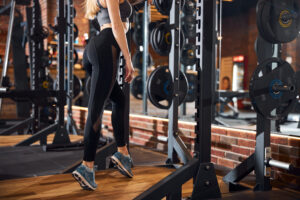
You train ankle stiffness by putting your athlete in an athletic position, a bent-knee position under load, isometric load, and dynamic load. This means landing on the balls of the foot, holding that position, and training the body to co-contract.
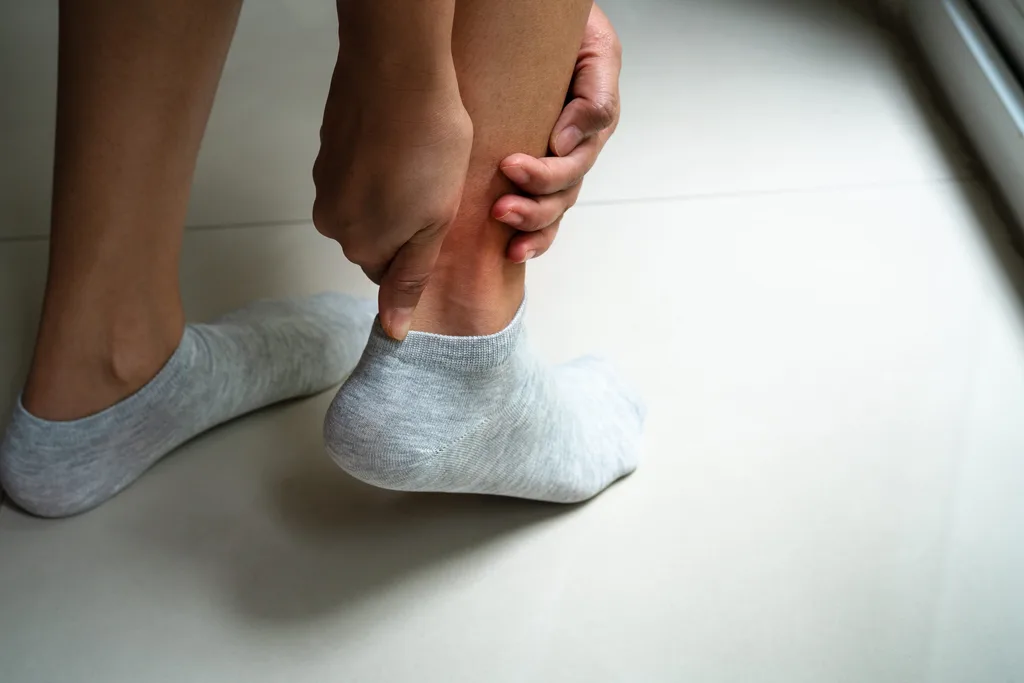
Do You Suffer From Ankle Stiffness?
Soleus and Muscle Pulsing
It is important to have a bent knee so you get more Soleus involved. When the knee is straight, it is going to be more gastroc. When you have a bent knee, Soleus is going to be the primary stabilizer.
The key is to create dynamic stiffness going on and off small platforms, and loading the system through isometric loading at the ankle joint.
We are not training for big calves or traditional isotonic strength. We are training for dynamic stiffness to be super stiff in milliseconds and to be able to relax.
That is muscle pulsing and co-contraction skill. Muscle pulsing, in terms of toe contractions to get massive amounts of stiffness in short periods of time, a tenth of a second, is more of a skill than strength.
Minimizing Yielding for Sprinting
When we sprint and run, we want to limit our yielding time. Everyone is going to yield and absorb, but we want to minimize yielding. When you run, you do not want to be mushy or loose. When you sprint, you want to have a strong spring.
We want our body to be a really strong, tight spring. It is going to be a short, dynamic, strong yield. We try to minimize yielding, but not so much that we do not get any recoil. A lot of times we want to minimize ground contact time, as athletes yield too much.
Step-by-Step Ankle Stability and Proprioception Progression
The base for ankle and overall leg stiffness is going to come from ankle stability, proprioception, ankle spring load capacity, and ankle co-contractions. You must recover from the activity to avoid ankle stiffness.
Barefoot Foot Position
Get out of your shoes. High heel drop puts the Achilles tendon in a constantly inflamed and shortened position, and cushioning turns off your foot’s natural functions. Stand on two legs with a small bend in the knees and toes lifted. Avoid overgripping the toes into the ground, then close your eyes.
Dynamic Eye and Balance Testing
If you can stabilize here with your toes lifted and bent knees, start to look side to side with your eyes closed. Lift one leg off the ground, eyes open, and hold this position without falling over for 45 seconds.
Keep one leg up, looking side to side with pauses and slow tempo, eyes open. Then perform one leg up, side to side, fast tempo, no pauses, eyes open.
Close your eyes, one leg up, and look forward for 45 seconds. With your eyes closed, one leg up, look side to side with a slow and paused tempo. Try eyes closed, one leg up, side to side, fast tempo for 45 seconds.
Eyes closed, lift one leg up, go to the ball of your foot and stabilize for 45 seconds. If you fall over, stay at that level for a few weeks until you pass it.
Dynamic Barefoot Movement and Submax Pogo Drills
After this progression, we need more dynamic movement, like barefoot warm-ups in the grass or barefoot submax plyometrics.
Light bounding or lunge movements barefoot with your eyes closed will improve your foot function with proprioception, waking up peronials and mechanical receptors needed for proper pretension and timing in ankle stiffness.
Barefoot Submax Pogo Series
Barefoot side to side, split stance, and regular submax pogo for three to 10 minutes per day, five to six days per week builds stiffness and elasticity. We are training the ankle spring load capacity, proprioception, ankle stability, and co-contraction timing all at once.
Single Leg Plate Hop Drill
Find two plates or something stable no taller than ankle height to hop onto, placed one to two shoe lengths apart. Hop forward on one leg, backward on one leg, jump to the side, then forward again. Repeat this motion slowly, then bring up the speed using a metronome around 40 to 120 BPM.