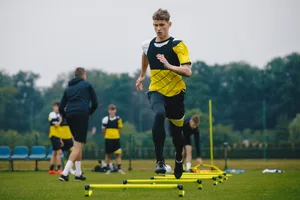



Your son plays varsity football at a high school on the south side of Colorado Springs. He’s fast, but not fast enough. He’s strong in the weight room, but it doesn’t always show up on the field. And there’s a combine in the spring with college coaches watching.
So you start looking for a private trainer. And there are a lot of them.
How do you pick a good one-on-one athletic training program? Look for four things. It should start with a real assessment of mobility, strength, speed and injury risk, not a generic workout. The plan should be built around the athlete’s sport and goals, and change as they progress. Progress should be retested every few weeks so you know it’s working.
Private Athletic Training in Colorado Springs, CO
And the coach should have the right certifications and coach technique in real time, rep by rep. If a trainer can’t tell you how they measure progress, keep looking.
What to look for
| Look for | Why |
| A real assessment first | You can’t fix weaknesses you haven’t found |
| Sport-specific training | A lineman and a point guard need different work |
| Retesting every few weeks | Proves the program is working |
| Hands-on coaching | Technique gets fixed on the spot |
| Qualified coach | Credentials and experience with athletes |
| Nutrition support | Training only goes as far as recovery and fuel |
It should start with testing
Any trainer can make an athlete tired. That’s not the same as making them better.
A good private program starts with an assessment. At AlphaGainz, every program does. Ours looks at mobility, flexibility, strength, balance and stability, speed and agility, body composition with an InBody scan, injury risk and the athlete’s goals. You can book a Free Performance Assessment to see where you stand.
Why does all of that matter? Because a slow 40-yard dash might not be a leg strength problem. It might be stiff ankles, or bad sprint mechanics, or poor hip mobility. Our post Why Ankle Stiffness Matters for Sprinting, Jumping, and Athletic Performance explains one of the most overlooked ones.
The plan should fit the sport
A soccer midfielder needs repeat-sprint ability and change of direction. A powerlifter needs a heavy squat, bench and deadlift. A basketball player wants inches on the vertical. Those are not the same program.
We call our approach “Train As You Play.” Football, basketball, soccer, baseball and track all get their own work in our Sports Training program. There’s dedicated Speed & Agility and Vertical Development work too.
In our Private (1-1) training, the plan is a fully customized 4 to 6 week block built around the athlete’s goal, whether that’s muscle, fat loss or performance. And it changes as they progress. It’s not a template that runs the same for everyone.
Progress should be measured
Ask any trainer this: how will we know it’s working?
The answer should be specific. In our private program, we retest strength, endurance or body composition every 4 to 8 weeks. Numbers go up, or we change the plan. Either way, you’re not guessing.
If an athlete is getting ready for testing day, the measuring matters even more. See How to Prepare for a Sports Combine: Training for the 40-Yard Dash, Pro Shuttle, Broad Jump and Vertical Jump.
Who’s doing the coaching?
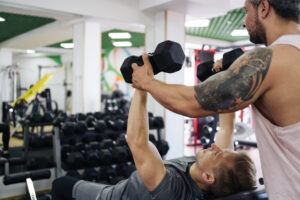
This is where one-on-one earns its place. A coach watching one athlete can fix a bad squat on the second rep, not the fifteenth. Every session in our private program is guided in real time for form and intensity.
Credentials matter too, especially with young athletes. The National Strength and Conditioning Association, the main professional group for strength coaches, tells parents that a youth program should be led by a qualified strength and conditioning professional with an appropriate certification. It names the Certified Strength and Conditioning Specialist, or CSCS, as an example. The NSCA also points out that many injuries in youth training happen at home or unsupervised, and that good supervision and taught technique cut those worries way down.
So ask. What certifications do you hold? How long have you coached athletes in my kid’s sport? You can meet our coaches on the Our Staff page.
Private, semi-private, or group?
One-on-one isn’t the only way to train. It’s the most focused. In our private sessions, it’s just the athlete and the coach, in a private space with no distractions, plus nutrition support and flexible scheduling.
If an athlete trains well with others, our semi-private Athletic Development membership puts 2 to 4 athletes with one coach. An athlete can start private to fix specific problems, then move to semi-private later. Both are listed on our Memberships page.
Don’t skip the food
Training only goes as far as recovery lets it. A high school athlete running on gas station snacks won’t get what they could out of any program. Our Nutrition program builds custom plans with calorie targets, meal structure and InBody tracking.
Frequently asked questions
What should a private athletic training program include?
An assessment, a plan built around the athlete’s sport and goals, retesting every few weeks, hands-on coaching and nutrition support.
How often should athletes be retested?
Our private program retests strength, endurance or body composition every 4 to 8 weeks.
What certifications should a youth strength coach have?
The NSCA recommends a qualified strength and conditioning professional with an appropriate certification, such as the CSCS.
Is one-on-one training better than group training?
It’s more focused. A coach working with one athlete corrects technique in real time and builds the whole plan around that athlete.
Ready to get tested? AlphaGainz is a veteran-owned training facility at 2031 B St. in Colorado Springs, open 24/7. Call 719-465-8021, read our Testimonials, or contact us.